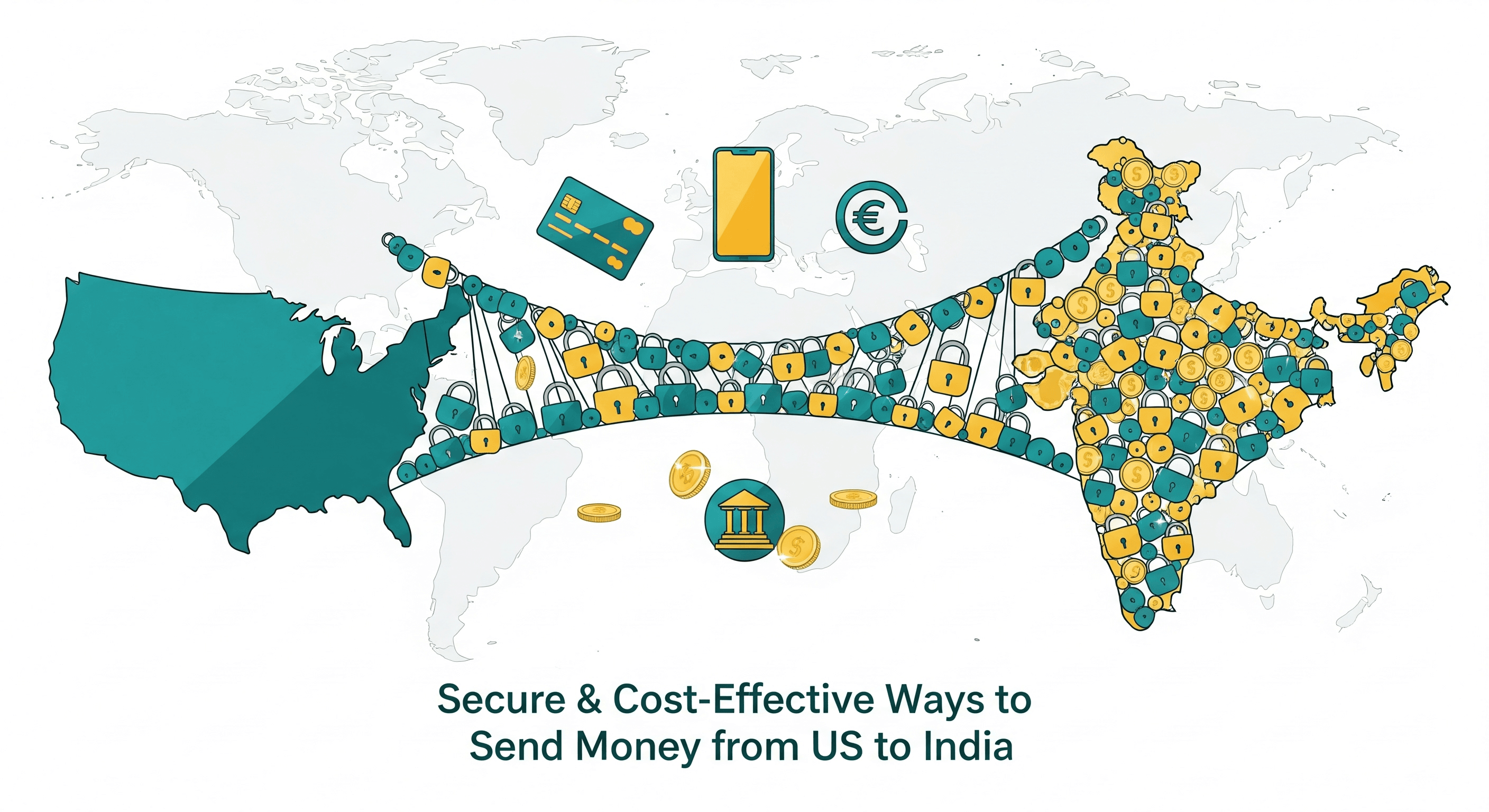
Sending money from the US to India is a lifeline for millions of NRIs. India is the world’s largest recipient of remittances, receiving over $125 billion in 2023 alone (World Bank). But for many, traditional wire transfers still feel like the only option, even though they are expensive, slow, and often lack transparency.
This guide explores secure and cost-effective alternatives to wire transfers, compares fees and exchange rates, and shows why smarter digital platforms like Abound give NRIs maximum value.
Traditional Wire Transfers: Why They’re Outdated
Wire transfers are reliable but costly. They work by sending money from your US bank to the recipient’s Indian bank through intermediary banks.
- Fees: $25–$50 per transfer.
- Hidden Costs: 2–3% exchange rate markup.
- Speed: 3–5 business days.
👉 Example: Sending $1,000 through a wire could cost $35 in fees and another $20–$30 lost to exchange markups, leaving your family with ₹2,000–₹3,000 less.
That’s why NRIs are switching to digital-first options.
Alternative Ways to Send Money from the US to India
NRIs today have several secure and affordable options. Here’s a breakdown:
A. Digital Payment Platforms
How it works:Transfer directly from your US bank account or card into an Indian account.
- Pros: Easy to use, 24/7 access via app/desktop.
- Cons: Some charge hidden FX markups.
Abound Advantage: Transparent fees, competitive INR conversion rates, and no hidden charges.
B. Online Money Transfer Services
How it works: Providers like Wise and Remitly move money digitally, bypassing banks.
- Pros: Faster than wires, multiple payment methods.
- Cons: Setup required, sometimes transfer limits.
Abound Advantage: Quick onboarding, compliant with US-India remittance rules, and flat low fees.
C. Mobile Wallets & Apps
How it works: Transfer to an Indian mobile wallet (Paytm, PhonePe, GPay).
- Pros: Instant delivery, trackable.
- Cons: Limited acceptance; the recipient must use the wallet.
Abound Advantage: Direct deposits into any Indian bank account, no wallet restriction.
D. Peer-to-Peer (P2P) Transfers
How it works: Direct person-to-person transfers (e.g., PayPal, Venmo).
- Pros: Convenient, low fees in some cases.
- Cons: Both sender & receiver must be on the same platform.
Abound Advantage: Funds move securely from your US account to the recipient’s Indian bank account, with no extra steps.
Cost Comparison: $1,000 Transfer from the US to India
| Method | Fee Charged | Exchange Rate | INR Received | Transfer Time | Notes |
| Traditional Bank Wire | $35 + markup | ₹85.50 | ₹85,500 | 3–5 days | Reliable but costly |
| Wise | ~$6.99 | ₹87.20 | ₹87,200 | 1–2 days | Good rates, transparent |
| Remitly | $3.99 | ₹86.80 | ₹86,800 | Same day | Low fees, but the rate is not always the best |
| Abound | $1.99 | $1=₹100 (up to $100) + ₹88.90 | ₹89,290 | 2–3 days (Elite = faster) | Best INR value + promo offer |
💡 Case Study:
Ramesh, an NRI from California, sends $1,000 home every month. Switching from bank wires to Abound saved him ~₹3,000 monthly, nearly ₹36,000 ($430) a year.
Ensuring Security in Money Transfers
When choosing a provider, security matters as much as cost.
- ✅ Encryption & SSL: Protects sensitive banking data.
- ✅ Two-Factor Authentication (2FA): Extra login safety.
- ✅ Fraud Prevention Systems: Detect suspicious activity.
Abound, Wise, and PayPal are all compliant with US FinCEN & RBI remittance guidelines. Always avoid shady platforms promising unrealistic rates.
Which Method Is Fastest?
- Wire Transfer: 3–5 business days.
- Wise / Remitly: 1–2 days.
- Abound Elite: Same-day or next-day transfers.
- Wallet-to-Wallet: Instant, but limited usability.
👉 If speed is critical (property payments, emergencies), Abound Elite or Remitly Express are the best choices.
Step-by-Step: How to Send Money with Abound
- Download the App from App Store / Play Store.
- Create an Account with ID verification (KYC).
- Link Your US Bank Account securely.
- Enter Recipient Details (Indian bank account).
- Confirm Transfer and track delivery in real time.
Takes under 5 minutes for the first-time setup; repeat transfers are even faster.
How to Choose the Right Method
When deciding:
- If cost matters most: Choose Abound for lowest fees & best rates.
- If speed matters most: Use Abound Elite or Remitly Express.
- If the recipient prefers wallet apps: Consider GPay/Paytm (though less flexible).
- For large payments (property, tuition): Go with trusted providers like Abound or Wise.
Best Practices for NRIs Sending Money
- Compare fees and FX rates before each transfer.
- Avoid weekend transfers (banks may delay processing).
- Use providers with transparent pricing.
- Keep records for tax purposes (IRS + Indian IT Dept).
Conclusion
Wire transfers no longer make sense for NRIs. With hidden fees and poor exchange rates, they cost families thousands yearly.
By using digital-first platforms like Abound, NRIs get:
- Lower flat fees
- Best exchange rates
- Secure transfers
- Faster delivery
👉 Whether you’re sending $500 for family expenses or $50,000 for property, smarter remittance choices can save you hundreds of dollars every year.
FAQs
What is the most cost-effective way to send money from the US to India?
Abound is one of the cheapest, thanks to its $1.99 flat fee and top INR rates.
Are mobile wallets safe for international transfers?
Yes, but their use is limited in India. Bank transfers are more universal.
How can I avoid high fees?
Avoid bank wires. Use transparent platforms like Abound or Wise.
Which is the fastest method?
Abound Elite and Remitly Express offer same-day transfers.
How do I ensure my transfer is secure?
Choose licensed providers with encryption, 2FA, and compliance certifications.