You are managing money in two countries.
- One app for transfers.
- Another for your NRE account.
- A separate portal for investments.
- Email threads for property payments.
- Spreadsheets for tax tracking.
Every login feels like switching worlds.
This has been the traditional NRI banking experience. Fragmented. Manual. Slow. But that model is changing. Embedded finance is integrating financial services directly into the platforms you already use. Instead of going to the bank, banking comes to you.
In this guide, you will understand how embedded finance eliminates friction in NRI banking, improves compliance, strengthens security, and simplifies cross-border transfers.
Traditional banking fragmentation often leads to delays, errors, and even blocked transfers. Embedded finance is changing this reality for NRIs, as explained in this detailed [Could Your International Transfer Be Blocked? Real Security Risks NRIs Face and How to Fix Them] guide.
What Is Embedded Finance? A Simple Explanation
Defining Embedded Finance
Embedded finance means financial services are built directly into non-financial platforms.
You do not visit a bank branch.You do not switch apps. Payments, lending, insurance, and transfers happen inside everyday platforms.
Examples include Uber in-app payments, Amazon Pay, and Shopify Capital. Banking becomes invisible but accessible.
The Technology Behind Embedded Finance
Embedded finance runs on:
- API-driven architecture
- Banking-as-a-Service platforms
- Open banking frameworks
- Cloud-based infrastructure
These systems allow real-time financial services inside digital platforms.
Why It Matters for NRIs
NRIs manage money across borders. Traditional systems require platform hopping.
Embedded finance unifies services in one experience. Reduced friction means faster transactions and fewer errors.
Think of embedded finance like electricity. You do not visit a power plant to charge your phone. Power comes to you. Embedded finance brings banking to wherever you are.
The Traditional NRI Banking Pain Points
Fragmented Financial Ecosystem
NRIs often manage:
- Separate apps for transfers
- Separate portals for investments
- Different logins for NRE and NRO accounts
Data is scattered. User experiences are inconsistent.
Mistakes become common.
Compliance Complexity
- NRIs must navigate regulations in multiple countries.
- Manual document uploads slow transactions. Compliance checks delay transfers.
- Confusion about reporting requirements is frequent.
Transfer Friction and Failures
- Multi-step processes for simple transfers.
- Hidden fees discovered late.
- Delayed fund availability.
- Poor tracking visibility.
When transfers get lost in fragmented systems, resolution becomes frustrating. Embedded finance’s unified tracking improves recovery, as discussed in this practical [What Happens If Your Transfer Is Lost? Stories and Solutions for NRIs] guide.
How Embedded Finance Solves NRI Banking Challenges
Unified Financial Experience
- One platform.
- Multiple services.
- Consistent interface.
- Integrated dashboard.
Switch between transfers, investments, and accounts without logging out.
Seamless Cross-Border Transfers
- Transfers can be initiated within integrated platforms.
- Exchange rates are visible in real time.
- Fees are transparent.
- Tracking is unified.
Embedded finance platforms with compliance integration reduce the risk of transfers being blocked or delayed, and this comprehensive [Could Your International Transfer Be Blocked? Real Security Risks NRIs Face and How to Fix Them] guide explains why.
Automated Compliance Management
Embedded platforms include:
- Built-in purpose code selection
- Automatic documentation generation
- Real-time regulatory checks
- Reporting integration
Embedded finance platforms automatically apply correct RBI purpose codes, eliminating manual errors that cause delays. This practical [What NRIs Need to Know About RBI’s Purpose Codes for Inward Remittances] guide explains why correct coding matters.
Integrated Security and Fraud Protection
Unified security systems provide:
- Consistent fraud monitoring
- Single authentication layers
- Coordinated fraud detection
Embedded architecture detects suspicious activity faster than fragmented systems. Strengthening personal awareness remains important, and this detailed [How to Prevent Fraud and Protect Your Money During International Transfers] guide complements technology-driven protection.
Embedded Finance + RegTech: The Perfect Partnership
How RegTech Powers Embedded Finance
RegTech automates compliance inside platforms.
It performs:
- Real-time monitoring
- Automated KYC and AML checks
- Dynamic regulatory updates
RegTech is the engine that makes embedded finance compliant, working invisibly to ensure integrated services meet regulatory standards, as explained in this detailed [Understanding RegTech: How Regulatory Tech Keeps NRI Transfers Safe and Compliant] resource.
Benefits of the Combination
- Faster onboarding.
- Reduced compliance errors.
- Lower operational costs.
- Better regulatory transparency.
Automatic Tax Compliance Features
Embedded systems can:
- Track transactions for tax reporting
- Generate compliance documents
- Support multi-jurisdiction reporting
For US-NRIs, embedded platforms can help track FBAR and FATCA thresholds, simplifying IRS compliance. This comprehensive [Avoiding US Penalties and Double Taxation: A US-NRI’s Guide to FBAR & FATCA] guide explains reporting requirements in detail.
Real-World Applications of Embedded Finance for NRIs
Scenario 1: Property Investment from Abroad
Embedded finance enables:
- Property discovery
- Developer verification
- Compliance-checked transfers
- Digital document signing
- Rental management integration
From listing to payment, everything can happen within one ecosystem. If you are exploring property investments, this detailed [Buying Property in India: A Complete Guide for NRIs, PIOs, OCIs & Foreigners] resource outlines compliance considerations.
Scenario 2: Student Financial Setup
Students can:
- Open US bank accounts before arrival
- Pay tuition via integrated systems
- Manage currency exchange
- Link family transfers
Indian students benefit significantly from these tools, and this helpful [How Indian Students Can Open US Bank Accounts Before Moving] guide explains the setup process.
Scenario 3: Family Remittances Made Simple
- Set recurring transfers once.
- Automate purpose codes.
- Track delivery.
- Notify recipients instantly.
Scenario 4: Investment Portfolio Management
Integrated dashboards show:
- NRE and NRO accounts
- Cross-border investments
- Tax harvesting tools
- Unified performance tracking
Embedded Finance and Tax Residency Considerations
How Tax Status Affects Options
Your residency status determines service availability. Some features vary by jurisdiction.
Many NRIs do not realize that exceeding 120 days in India could change tax status, and this detailed [The 120-Day Rule for NRIs: Are You Accidentally a Tax Resident of India?] guide explains how.
Embedded Solutions for Tax Tracking
Platforms can include:
- Day-count tracking
- Residency alerts
- Cross-border documentation
- Tax planning tools
Future: AI-Powered Tax Optimization
- Predictive tax planning.
- Automated residency monitoring.
- Intelligent transfer timing suggestions.
Choosing Embedded Finance Platforms: What to Look For
Essential Features
Look for:
- Multi-currency support
- RBI and FEMA integration
- Strong security certifications
- Real-time transfer tracking
- Automatic documentation storage
Integration Capabilities
Ensure the platform connects to:
- Indian banks
- International banks
- NRE and NRO accounts
Questions to Ask Providers
- What licenses do you hold?
- How are transfers tracked?
- What happens if a transfer fails?
- Embedded platforms with robust tracking make recovery easier, as explained in this practical [What Happens If Your Transfer Is Lost? Stories and Solutions for NRIs] guide.
The Future of Embedded Finance for NRIs
Emerging Trends
- AI-powered personalization.
- Voice-enabled banking.
- Blockchain-based transfers.
- Super apps combining finance and lifestyle.
What This Means for NRI Banking
- More seamless experiences.
- Lower costs.
- Better security.
- Greater transparency.
Preparing for the Embedded Future
- Stay informed.
- Prioritize security.
- Choose compliant platforms.
Potential Challenges and How to Navigate Them
Data Privacy Concerns
- More integration means more data sharing.
- Evaluate privacy policies carefully.
- Choose platforms with strong data protection records.
Platform Dependency Risks
- Understand data portability.
- Maintain backup access.
- Diversify critical financial services if needed.
Security in Integrated Systems
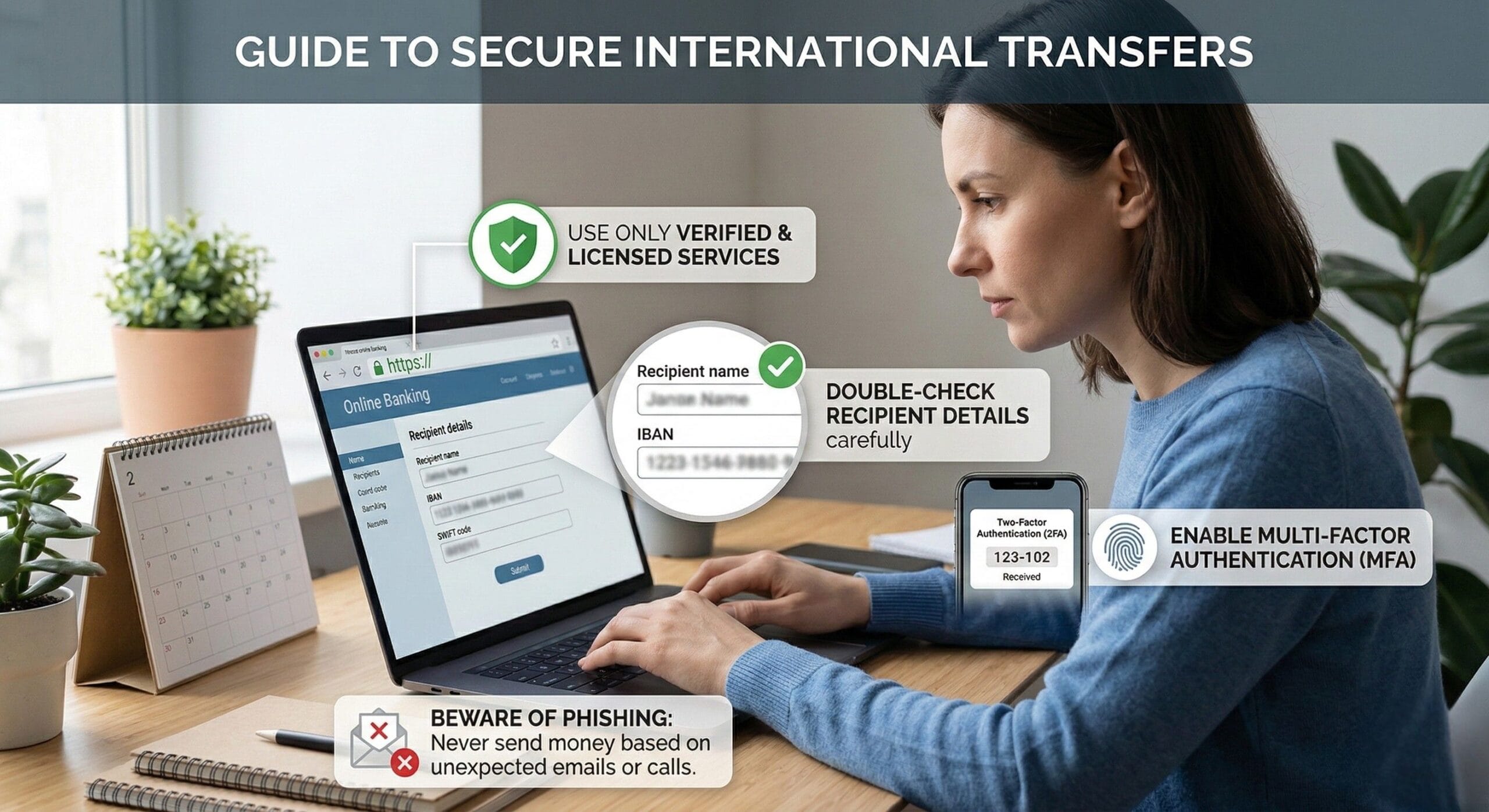
Unified systems require strong authentication. Enable multi-factor authentication.
While embedded finance improves security overall, your personal vigilance remains essential, and this detailed [How to Prevent Fraud and Protect Your Money During International Transfers] guide reinforces safe habits.
Quick Comparison: Traditional vs. Embedded NRI Banking
| Aspect | Traditional Banking | Embedded Finance |
|---|---|---|
| Platforms | Multiple apps | Single integrated experience |
| Transfers | Multi-step | Streamlined |
| Compliance | Manual | Automated |
| Tracking | Fragmented | Unified |
| Experience | Inconsistent | Seamless |
| Security | Separate systems | Unified protocols |
| Cost | Often hidden | Transparent |
Conclusion
Embedded finance is transforming NRI banking from fragmented to seamless. It unifies services, automates compliance, strengthens security, and improves transparency. Powered by APIs, RegTech, and cloud infrastructure, it enables smoother property purchases, student setups, family remittances, and investment management. Evaluate your current tools. Compare them against embedded options.
Embedded finance does not just make banking easier. It reduces the transfer blocks and delays common in traditional systems, as explained in this comprehensive [Could Your International Transfer Be Blocked? Real Security Risks NRIs Face and How to Fix Them] guide. This transformation has just begun. Expect even more seamless experiences ahead.
Frequently Asked Questions
Q1: Is embedded finance safe for NRI banking?
Yes, when using regulated platforms with strong security certifications and compliance integration.
Q2: Do I need technical knowledge to use embedded finance platforms?
No. The technology works behind the scenes. Interfaces are designed to be simple.
Q3: Can embedded finance help with compliance requirements?
Yes. Most platforms automate purpose codes, documentation, and reporting.
Q4: Are embedded finance services available for all NRI needs?
Coverage is expanding rapidly. Transfers and investments are widely available. Some niche services are still evolving.
Q5: How do I transition from traditional banking to embedded finance?
Start with one service, evaluate the experience, and gradually integrate additional services.