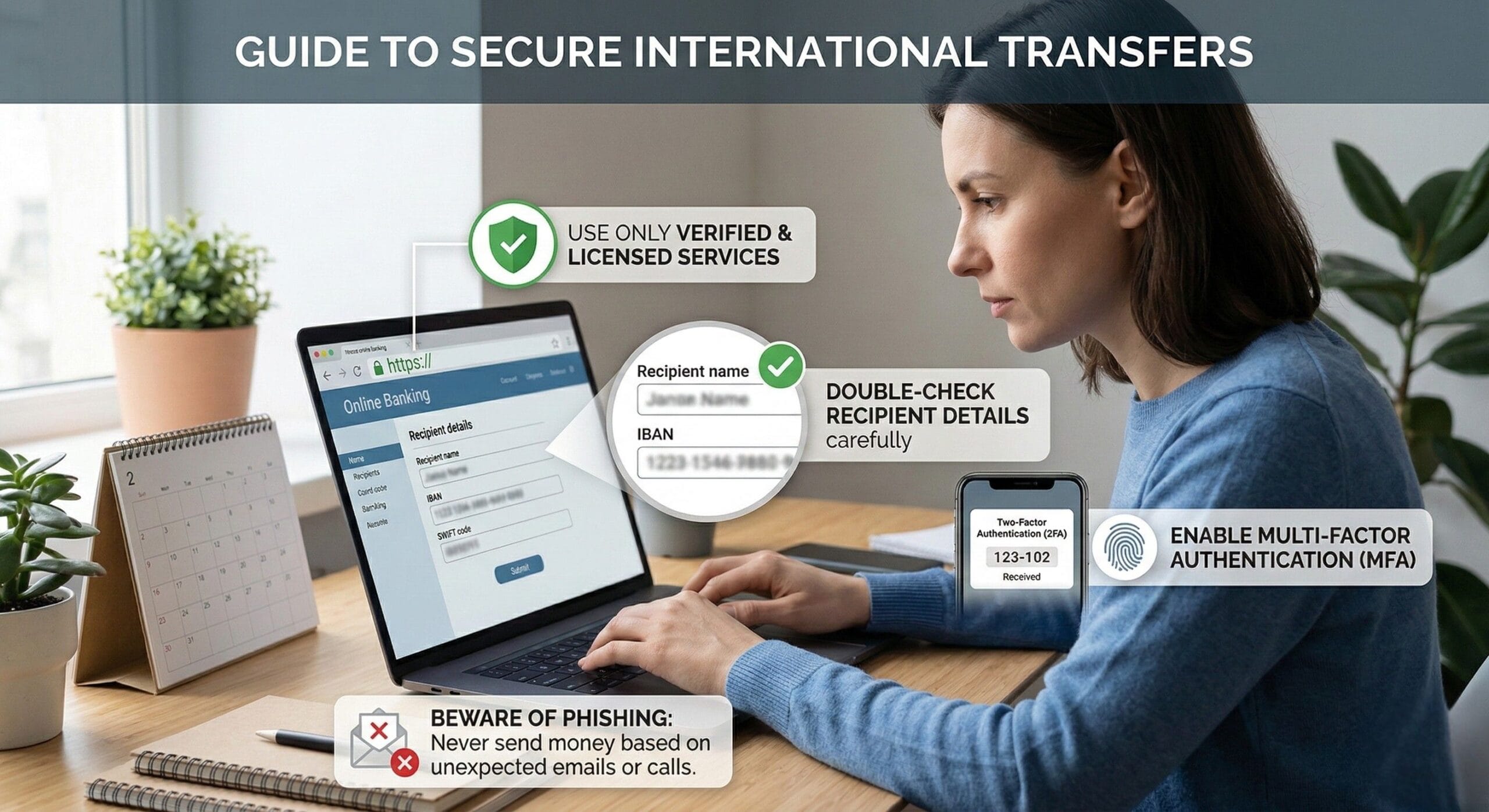
Many US-based NRIs assume that if they have already paid tax in India, they are safe. Unfortunately, that assumption can be expensive. Thousands of US-NRIs unknowingly violate FBAR or FATCA reporting rules every year. Not because they are hiding money, but because the rules are complex and easy to misunderstand.
This guide will help you understand FBAR and FATCA clearly, avoid penalties, and prevent double taxation between India and the United States. You will learn who must file, what accounts are reportable, how to claim foreign tax credits, and how to keep your cross-border transfers compliant.
Non-compliance does not just mean penalties. It can also result in your international transfers being flagged or delayed, and this detailed [Could Your International Transfer Be Blocked? Real Security Risks NRIs Face and How to Fix Them] guide explains how tax issues can affect banking.
What Are FBAR and FATCA? Understanding the Basics
FBAR (FinCEN Form 114) Explained
- FBAR stands for Report of Foreign Bank and Financial Accounts.
- It is enforced by FinCEN, the Financial Crimes Enforcement Network in the United States.
- Its purpose is to combat tax evasion and money laundering by ensuring US persons disclose foreign financial accounts.
- If the total aggregate value of your foreign accounts crosses the reporting threshold, you must file.
FATCA (Foreign Account Tax Compliance Act) Explained
- FATCA requires US taxpayers to report specified foreign financial assets.
- Unlike FBAR, FATCA is filed with your tax return using Form 8938.
- It also requires foreign financial institutions to report accounts held by US persons to the IRS.
FBAR vs. FATCA: Key Differences at a Glance
| Criteria | FBAR | FATCA |
| Filing Threshold | $10,000 aggregate | Higher thresholds |
| Where to File | FinCEN portal | With tax return |
| Penalties | Severe civil and criminal | Civil penalties |
| Who Must File | US persons | US taxpayers meeting asset limits |
Your tax residency status directly impacts these requirements. Many NRIs do not realize that spending more than 120 days in India could make them accidental tax residents, which is explained in this detailed [The 120-Day Rule for NRIs: Are You Accidentally a Tax Resident of India?] guide.
Who Must File? Reporting Requirements for US-NRIs
FBAR Filing Thresholds
- You must file FBAR if the aggregate value of all foreign financial accounts exceeds $10,000 at any time during the year.
- This includes bank accounts, fixed deposits, investment accounts, and joint accounts.
- Joint accounts count in full, not proportionally.
FATCA Filing Thresholds
- FATCA thresholds differ depending on whether you live in the US or abroad.
- For married couples filing jointly and living abroad, the threshold is significantly higher than for single filers in the US.
- Specified foreign financial assets include bank accounts, securities, and certain foreign investments.
Types of Accounts US-NRIs Must Report
- NRE accounts
- NRO accounts
- Fixed deposits
- Indian mutual funds and stocks
- PPF and EPF accounts
- Insurance policies with cash value
This applies in reverse too. Indian students moving to the US should understand how opening accounts affects reporting obligations once they become residents, and this practical [How Indian Students Can Open US Bank Accounts Before Moving] guide explains the process.
Common Scenarios That Trigger FBAR & FATCA Reporting
Rental Income from Indian Properties
- If you earn rental income from Indian property, you must report both the income and the account holding rental proceeds.
- India may deduct TDS, but the income is still reportable in the US.
- If you are planning real estate investments, understanding reporting obligations beforehand is critical, and this detailed [Buying Property in India: A Complete Guide for NRIs, PIOs, OCIs & Foreigners] resource explains key considerations.
Receiving Money from India (Inward Remittances)
- Receiving funds from India is not automatically taxable, but the foreign account holding those funds may be reportable.
- Every remittance into India is tagged with an RBI purpose code, and understanding documentation requirements through this helpful [What NRIs Need to Know About RBI’s Purpose Codes for Inward Remittances] guide ensures smoother compliance.
Inheritance and Gifts from Indian Relatives
- Large gifts or inheritance amounts may trigger reporting requirements.
- Even if not taxable in the US, they must be disclosed under specific IRS forms depending on value.
How to Avoid Double Taxation as a US-NRI
Understanding the US-India DTAA
- The Double Taxation Avoidance Agreement between India and the US prevents the same income from being taxed twice.
- It covers interest, dividends, rental income, and capital gains.
- Understanding treaty provisions helps optimize tax outcomes.
Claiming Foreign Tax Credits (Form 1116)
If you paid tax in India, you can claim foreign tax credits in the US. Steps include:
- Identify qualifying Indian taxes
- Complete Form 1116
- Attach supporting documentation
- Maintain proof of tax paid
Common mistakes include claiming credit for non-qualifying taxes.
Practical Examples of Double Taxation Scenarios
- Interest income from NRO accounts may be taxed in India and reportable in the US.
- Rental income from Indian property may attract TDS in India but is also taxable in the US.
- Capital gains from Indian investments require careful reporting in both countries.
Pro Tip: Keep meticulous records of taxes paid in India. You will need them to claim foreign tax credits and avoid paying twice.
The Real Cost of Non-Compliance: Penalties That Hurt
FBAR Penalties
- Non-willful violations can result in penalties up to $10,000 per violation.
- Willful violations can lead to the greater of $100,000 or 50% of the account balance.
- Criminal penalties may apply in severe cases.
FATCA Penalties
- Failure to file Form 8938 can result in a $10,000 penalty.
- An additional $10,000 may apply for every 30 days of continued non-filing after IRS notice, up to $50,000.
Beyond Fines: Other Consequences
- IRS audits.
- Increased scrutiny.
- Difficulty in future filings.
Non-compliance can also trigger security flags on international transfers, and this comprehensive [Could Your International Transfer Be Blocked? Real Security Risks NRIs Face and How to Fix Them] guide explains how tax red flags affect banking systems.
Keeping Your Transfers Compliant and Secure
Documentation Best Practices for Cross-Border Transfers
Maintain:
- Bank statements
- Tax payment proofs
- Transfer confirmations
- Purpose documentation
Proper documentation protects you if something goes wrong. Lost transfers happen more often than expected, and this real-life [What Happens If Your Transfer Is Lost? Stories and Solutions for NRIs] resource shows why records matter.
How RegTech Makes Compliance Easier
- RegTech refers to regulatory technology that automates compliance monitoring.
- It tracks reporting thresholds and flags inconsistencies.
- Modern regulatory tools are transforming compliance management, as explained in this insightful [Understanding RegTech: How Regulatory Tech Keeps NRI Transfers Safe and Compliant] guide.
Protecting Yourself from Fraud While Staying Compliant
- Fraud schemes targeting NRIs include phishing and fake investment offers.
- Fraud can complicate tax reporting and create documentation gaps.
- To reduce risk, review this practical [How to Prevent Fraud and Protect Your Money During International Transfers] guide.
Modern Solutions for Seamless NRI Compliance
How Embedded Finance Simplifies NRI Banking
- Embedded finance integrates financial services within digital platforms.
- It enables real-time compliance tracking and automated reporting.
- This evolution in NRI banking is explained in detail in this forward-looking [Embedded Finance: How It’s Making NRI Banking More Seamless Than Ever] resource.
Choosing Transfer Services with Built-in Compliance Features
Look for:
- Real-time tracking
- Automatic compliance checks
- Transparent documentation support
- Strong regulatory partnerships
Step-by-Step Guide to Filing FBAR and FATCA
Filing FBAR: The Process
- Gather account statements and maximum balances
- Access the FinCEN BSA E-Filing system
- Complete Form 114 electronically
- Submit by April 15 with automatic extension to October 15
Filing FATCA (Form 8938)
- Determine eligibility threshold
- Gather asset details
- Complete Form 8938
- File with annual tax return
Important Deadlines to Remember
- FBAR deadline is April 15 with automatic extension to October 15.
- FATCA deadline aligns with your tax return.
- Late filing options may be available under specific compliance programs.
Quick Compliance Tips for US-NRIs
- Track all foreign account balances
- Document every international transfer
- Keep records for at least 5 years
- Monitor your days spent in India
- Use DTAA provisions
- File FBAR even if no tax is owed
- Work with a cross-border specialist
- Set calendar reminders
Conclusion
- FBAR and FATCA compliance is essential for US-NRIs.
- Understanding requirements protects you from severe penalties.
- Using DTAA provisions and foreign tax credits helps prevent double taxation.
- Audit your accounts. Organize documentation. File on time.
- Consider consulting a tax professional specializing in US-India cross-border taxation.
Frequently Asked Questions
Q1: What is the penalty for not filing FBAR?
Non-willful violations can result in penalties up to $10,000 per violation. Willful violations can reach the greater of $100,000 or 50% of account balance.
Q2: Do I need to file both FBAR and FATCA?
Yes, if you meet both reporting thresholds. They are separate filings with different requirements.
Q3: Are NRE accounts reportable under FBAR?
Yes. NRE accounts are foreign financial accounts and must be reported if aggregate thresholds are crossed.
Q4: Can I amend a previously filed FBAR?
Yes. You can submit an amended FBAR through the FinCEN e-filing system.
Q5: What if I missed FBAR filing for previous years?
The IRS offers streamlined compliance procedures for eligible taxpayers. Consult a qualified tax advisor immediately.