You send money from the US for your mother’s surgery in India. The amount is large. The hospital is waiting. Your bank shows “completed.” But your family says nothing has arrived. You refresh the app again and again. The status now says “pending.” No one can tell you where the money is.
This is the fear most NRIs experience at least once. The panic is real. The silence from banks makes it worse. Here is the truth. Most lost transfers are not actually lost. They are stuck in compliance checks, correspondent banks, or technical loops. The key is knowing what to do quickly.
In this article, we share real NRI stories, explain why transfers disappear, and give you exact recovery steps. Lost transfers are also part of broader risks NRIs face. For a complete overview of those risks, you can explore this detailed Could Your International Transfer Be Blocked? Real Security Risks NRIs Face and How to Fix Them.
Real Stories – When NRI Transfers Disappeared
Story 1 – The Property Payment That Vanished for 3 Weeks
An NRI in the US sent 85,000 dollars to purchase a flat in Mumbai. The money left his US account instantly. But it never reached India. After several calls, the issue became clear. The inward remittance had an incorrect purpose code. Instead of being tagged as a property payment, it was categorized under general family maintenance.
The receiving bank placed the funds on compliance hold. It took 18 days, multiple escalations, and documentation from both banks to release the money.
Purpose codes matter more than most people realize. If you want to avoid this exact situation, read this essential guide on What NRIs Need to Know About RBI’s Purpose Codes for Inward Remittances before initiating large transfers.
Story 2 – The Student Whose Tuition Fee Got Stuck
An Indian student in the US received tuition money from parents in India. The account was newly opened. The transfer got flagged as unusual activity. The intermediary bank held the funds for 10 days pending verification.
The student had to provide admission letters, visa documentation, and proof of enrollment. Many students face this in their first semester. Setting up accounts properly before moving can prevent it. This practical resource on How Indian Students Can Open US Bank Accounts Before Moving explains how to avoid early compliance holds.
Story 3 – The Family Emergency Transfer Blocked by Tax Flags
An NRI sent emergency funds for medical treatment to aging parents in India. The transfer was flagged due to confusion around the sender’s tax residency status. Reporting inconsistencies triggered additional scrutiny.
The issue required intervention from a tax advisor and submission of supporting documentation before the funds were cleared.
Tax rules can quietly impact transfers. If you are unsure about your residency position, review this breakdown on The 120-Day Rule for NRIs: Are You Accidentally a Tax Resident of India to avoid unpleasant surprises.
Why Do NRI Transfers Get Lost? The Technical Reality
The Journey of an International Transfer
An international transfer typically flows like this:
Originating bank → SWIFT network → Correspondent banks → Receiving bank
Each institution runs its own compliance checks. Every checkpoint is a possible delay point. Even if your bank says “completed,” the funds may still be moving within intermediary systems.
Common Reasons Transfers Disappear
| Reason | Frequency | Typical Resolution Time |
|---|---|---|
| Incorrect beneficiary details | Very Common | 3 to 7 days |
| Purpose code errors | Common | 5 to 15 days |
| Compliance or AML holds | Common | 7 to 21 days |
| Correspondent bank delays | Moderate | 3 to 10 days |
| Fraud screening flags | Moderate | 5 to 14 days |
| Technical system failures | Rare | 1 to 5 days |
Most cases are delays, not permanent losses.
The Correspondent Banking Black Hole
Sometimes intermediary banks hold funds without notifying you directly. Tracking may show “processed,” yet the receiving bank has not credited the account. These delays often involve nostro and vostro accounts between banks.
Technology is slowly reducing these blind spots. If you are curious about how compliance tech is changing transfer reliability, this explainer on Understanding RegTech: How Regulatory Tech Keeps NRI Transfers Safe and Compliant gives a clear overview.
Compliance Holds – The Most Common Culprit
When Banks Freeze Transfers for Verification
Banks freeze transfers for:
- AML screening triggers
- KYC documentation gaps
- Unusual transaction patterns
- Cross border reporting mismatches
These checks are automated and conservative.
Purpose Code Failures That Trap Your Money
The Reserve Bank of India requires strict purpose code classification for inward remittances. Common mistakes include selecting family maintenance for property payments or using incorrect investment codes. Incorrect codes can result in automatic holds or even returns.
US Specific Compliance That Affects Transfers
US NRIs must comply with FBAR and FATCA reporting. Failure to report foreign accounts can trigger flags. The Internal Revenue Service shares information under global reporting frameworks. Non compliance does not always block transfers directly, but it increases scrutiny.
US NRIs should understand these rules thoroughly, and this detailed resource on Avoiding US Penalties and Double Taxation: A US-NRI’s Guide to FBAR & FATCA explains the key requirements clearly.
Step-by-Step – How to Find and Recover Your Lost Transfer
Step 1 – Gather Your Transfer Documentation
Collect:
- Transaction reference number
- SWIFT tracking ID
- Sender and receiver account details
- Transfer amount and date
- Confirmation emails
- Purpose documentation
Without these, investigation slows down.
Step 2 – Contact the Right Parties in Order
- Start with the sending bank. Request SWIFT GPI tracking or a transaction trace.
- Then contact the receiving bank to check for compliance holds.
- If needed, the sending bank can contact correspondent banks.
- If you used a fintech app, use in app escalation tools immediately.
Step 3 – Initiate a Formal Trace Request
- Ask for a SWIFT trace, often via an MT199 inquiry.
- Initial responses usually arrive within 3 to 5 business days.
- Some banks charge a trace fee.
- The report will show where the funds currently sit.
Step 4 – Escalation Paths When Banks Don’t Help
If responses are unsatisfactory, escalate.
- In India, approach the RBI Ombudsman.
- In the United States, escalate to the Consumer Financial Protection Bureau.
- In the United Kingdom, approach the Financial Ombudsman Service.
- In the UAE, contact the Central Bank of UAE.
- In Canada, escalate to the Financial Consumer Agency.
Step 5 – Document Everything for Potential Recovery
Keep timelines. Record representative names. Preserve emails and chat transcripts. If delays persist, professional advice may help.
Prevention is always better, and this broader guide on [Could Your International Transfer Be Blocked? Real Security Risks NRIs Face and How to Fix Them] explains how to reduce future risk.
Prevention – How to Ensure Your Transfers Never Get Lost
Pre-Transfer Checklist for NRIs
- Verify beneficiary details carefully
- Use a small test transfer for new recipients
- Confirm correct purpose code
- Update KYC on both ends
- Maintain consistent transfer patterns
- Pre inform banks for large transfers
- Use services with real time tracking
Choosing Safer Transfer Methods
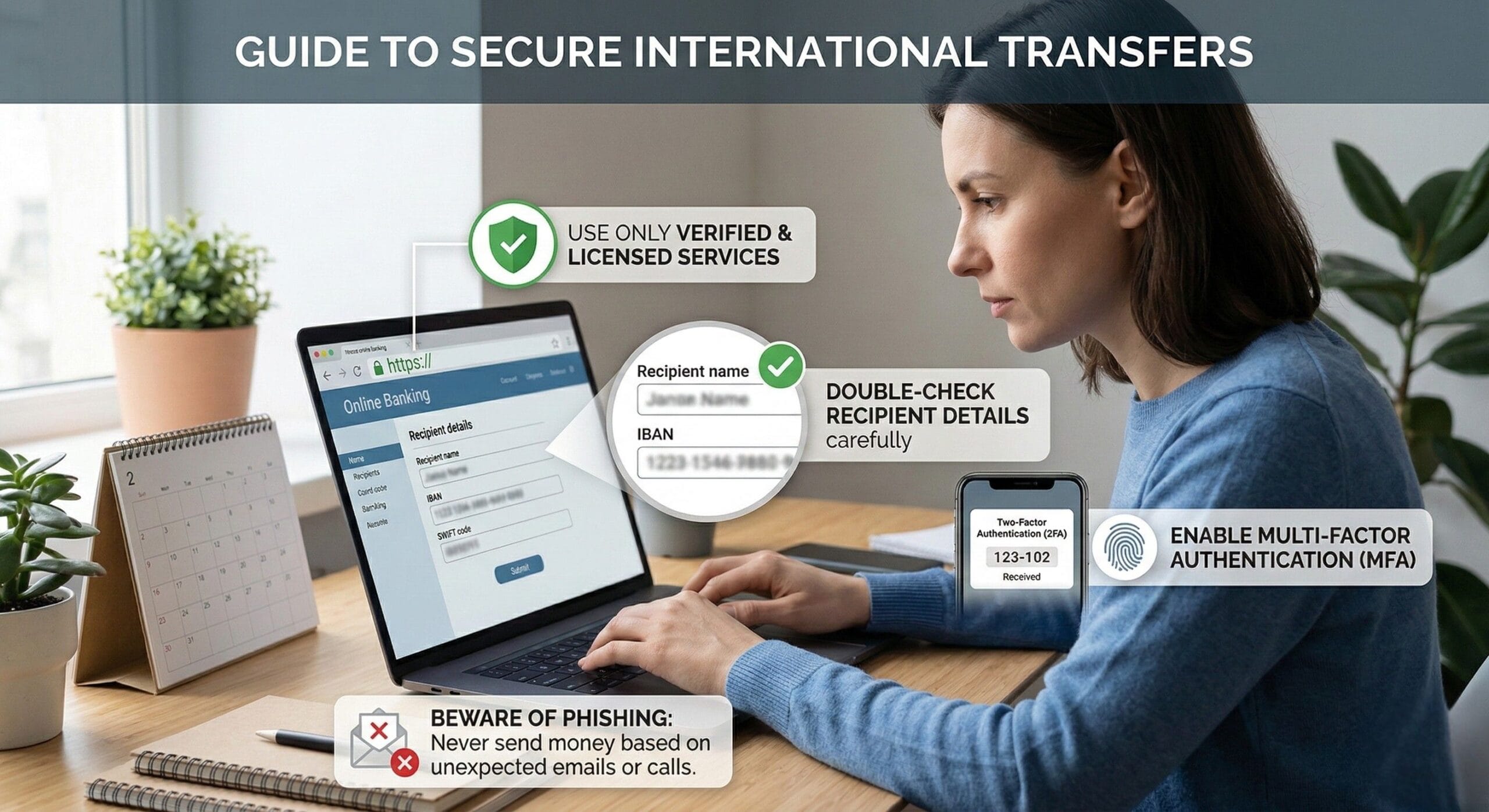
Traditional banks offer stability. Fintech services often offer better tracking Choose services with compliance verification and transparent documentation processes.
To protect every transaction proactively, review this guide on How to Prevent Fraud and Protect Your Money During International Transfers.
The Role of Modern Banking Technology
Embedded finance integrates compliance checks within platforms. Real time verification reduces post transfer surprises.
If you want to understand how this evolution improves reliability, explore this forward looking analysis on Embedded Finance: How It’s Making NRI Banking More Seamless Than Ever.
Special Considerations for High Value Transfers
Property purchases require extra documentation and planning. Investment repatriation may need tax clearance.
If you are planning real estate payments, this comprehensive resource on Buying Property in India: A Complete Guide for NRIs, PIOs, OCIs & Foreigners explains what to prepare in advance.
What Compensation Can You Claim for Lost Transfers?
Understanding Your Rights
Regulations in many jurisdictions require banks to assist in tracing and resolving delays. Service agreements may define compensation obligations.
Types of Compensation Available
- Refund of transfer fees
- Interest for delayed funds
- Exchange rate adjustments
- In rare cases, consequential damages
How to File a Compensation Claim
Submit written complaints with supporting documentation. Follow formal timelines. Be realistic. Most claims cover fees and minor interest.
Key Takeaways – Your Transfer Recovery Toolkit
| Situation | Immediate Action |
| Transfer pending more than 3 days | Request SWIFT trace |
| Money deducted but not received | Check compliance hold |
| Bank unresponsive | File ombudsman complaint |
| Large property transfer delayed | Verify purpose code |
| Recurring issues | Review KYC status |
Remember, 95 percent of lost transfers are recoverable. They are usually stuck, not gone.
Conclusion
Lost transfers are stressful. But they are rarely permanent. With the right documentation and escalation steps, recovery is usually possible. The best solution is prevention. Use proper purpose codes, maintain compliance, and plan large transfers carefully.
Bookmark this guide. Share it with fellow NRIs. And for complete protection against broader risks, explore this comprehensive resource on [Could Your International Transfer Be Blocked? Real Security Risks NRIs Face and How to Fix Them].
Frequently Asked Questions
How long should I wait before assuming my transfer is lost?
Wait 5 to 7 business days for standard transfers. Initiate inquiry after 5 days if there is no update.
Can I get a full refund if my transfer is permanently lost?
Yes. Regulations in most jurisdictions require full refund plus fees if funds are not delivered.
Does my bank have to help me trace a transfer?
Yes. Banks are obligated to initiate trace requests upon customer request.
Are fintech transfer services safer than traditional banks?
Fintech platforms often provide better tracking visibility. Banks may offer stronger correspondent networks. Choose providers with strong compliance systems and transparent recovery processes.