Imagine sending money to India with just one click. No repeated forms, no delays, and no stress about entering details every single time. Yet most NRIs still go through a tedious process for every transfer. They re-enter bank details, wait for verification, and worry about errors.
The smarter solution is simple. Link your US bank account directly to your NRE or NRO account and create a seamless transfer pipeline. Modern platforms like Abound make this setup quick and secure. Once done, your transfers become instant and effortless.
This guide walks you through everything from understanding account types to completing your first 1-click transfer. It also shows how this setup helps you manage compliance better, especially when you [link] plan around remittance tax impact on transfers to reduce unnecessary costs.
Understanding NRE vs NRO Accounts: Which Should You Link?
NRE Account (Non-Resident External)
An NRE account is designed for foreign income that you bring into India. The money is held in INR but originates from abroad.
The biggest advantage is tax efficiency. Interest earned is tax-free in India, and funds are fully repatriable back to the US when needed.
This makes NRE accounts ideal for long-term savings, investments, and family support transfers.
NRO Account (Non-Resident Ordinary)
An NRO account is meant for income earned within India. This includes rent, dividends, pensions, or property proceeds.
Interest earned is taxable in India, and repatriation is limited to 1 million USD per financial year under FEMA guidelines.
NRO accounts are useful for managing Indian income and expenses while maintaining compliance.
Quick Comparison Table
| Feature | NRE Account | NRO Account |
| Funding Source | Foreign income | Indian + Foreign income |
| Interest Taxation | Tax-free | Taxable |
| Repatriability | Fully repatriable | Limited (1M USD/year) |
| Best for Family Support | Preferred | Alternative |
For most regular transfers, NRE accounts are preferred due to simplicity and tax benefits.
Benefits of Linking Your US Bank to NRE/NRO Account
Save Time on Every Transfer
Once linked, you no longer need to enter details repeatedly. Transfers can be initiated instantly using saved beneficiary information. This is especially useful for monthly family support.
Better Exchange Rates
Direct transfers reduce unnecessary intermediaries. This often results in better pricing, and if you want to maximize value, [link] understanding how exchange rates vary across platforms helps you choose the most cost-efficient option.
Enhanced Security
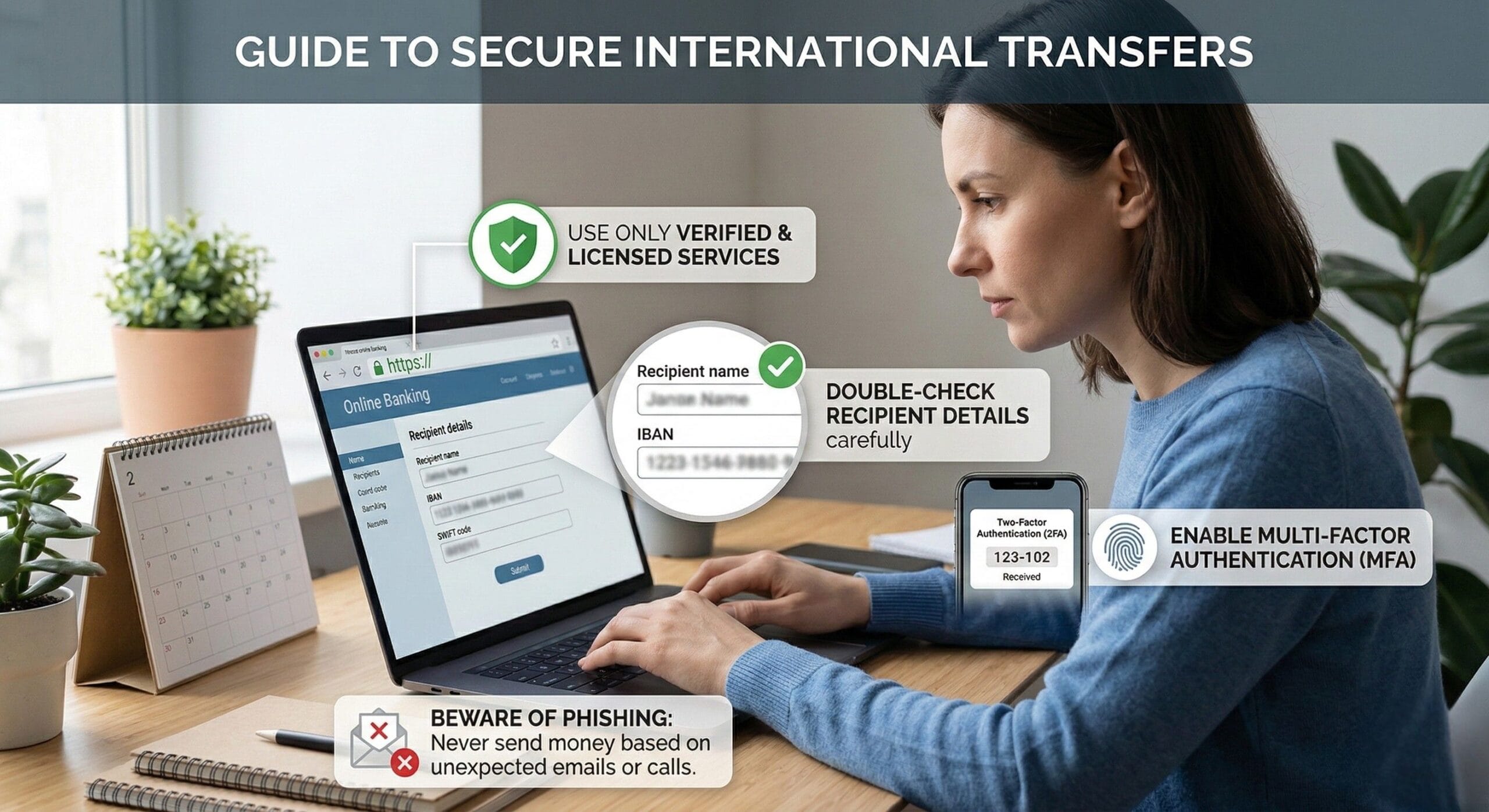
Linked accounts are pre-verified, which reduces fraud risk. Secure encryption and authentication ensure safe transfers every time.
Simplified Tax Documentation
Every transfer is recorded automatically. This creates a clean audit trail, which becomes useful when you [link] evaluate tax treatment of money sent to family members and maintain proper documentation.
What You’ll Need Before Starting
Essential Documents and Information
From your US bank, you need your account number, routing number, and access to online banking.
From your Indian account, keep your account number, IFSC code, and registered name ready.
You will also need identification such as your passport, SSN or ITIN, and address proof.
Pre-Setup Checklist
| Item | Status |
| US bank active | ☐ |
| NRE/NRO active | ☐ |
| Online access ready | ☐ |
| ID documents ready | ☐ |
| Time available | ☐ |
Step-by-Step Guide: Linking with Abound (Recommended Method)
Why Abound Is the Best Platform for Account Linking
| Factor | Abound | Banks | Other Apps |
| Setup Time | 5-10 min | 30-60 min | 15-25 min |
| Verification | Instant | Days | 1-2 days |
| Experience | Excellent | Poor | Average |
| Rates | Best | Poor | Variable |
| 1-Click | Yes | No | Partial |
Step 1 – Create Your Abound Account
Visit the platform, sign up using your email, and verify your account. This takes only a few minutes.
Step 2 – Complete Identity Verification
Enter your details, upload ID, and complete verification. This step ensures compliance and security.
Step 3 – Link Your US Bank Account
You can link your bank instantly using secure login or manually using routing and account numbers. Instant linking is faster and recommended.
Step 4 – Add Your NRE/NRO Account as Beneficiary
Enter your Indian account details, choose NRE or NRO, and save the beneficiary. This step ensures your transfers are ready to go.
Step 5 – Make Your First 1-Click Transfer
Select your linked bank, choose your beneficiary, enter the amount, and confirm. Your transfer is complete in seconds and can be tracked in real time.
Alternative Methods: Linking Through Other Platforms
Traditional Bank Wire Setup
Banks require manual setup, documentation, and longer verification timelines. To compare all methods, [link] understanding differences between bank transfers and apps helps you evaluate the right option.
Other Money Transfer Apps
Some apps offer decent setup processes, but they lack consistency in rates and speed.
Why Abound Wins
| Feature | Abound | Others |
| Simplicity | High | Medium |
| 1-Click | Yes | Partial |
| Rates | Best | Variable |
| Focus | NRI-specific | Generic |
Tax Benefits of Direct NRE/NRO Account Transfers
How Direct Linking Helps with Tax Efficiency
Linked transfers create a consistent record of transactions. This makes it easier when you [link] plan strategies around remittance tax rules and track your transfers effectively.
For Family Support Transfers
Recurring transfers can be structured efficiently within limits. To stay compliant, [link] understanding taxation rules for sending money to family ensures you avoid surprises.
NRE Account Tax Benefits in India
Interest is tax-free, and funds remain fully repatriable. This makes NRE accounts ideal for efficient financial planning.
Optimizing Your Linked Account for Best Results
Tip 1 – Set Up Rate Alerts
Currency rates change constantly. To maximize value, [link] learning how exchange rate timing impacts transfers can help you send money at the right moment.
Tip 2 – Schedule Recurring Transfers
Automate monthly transfers to avoid manual effort and ensure consistency.
Tip 3 – Use Multiple Beneficiaries
You can link different accounts for different needs.
Tip 4 – Keep Transfer Records Organized
Download statements regularly and categorize transfers for easy tracking.
Troubleshooting Common Issues
Issue 1 – Bank Verification Failed
Check details carefully and retry. Use manual verification if needed.
Issue 2 – Beneficiary Rejected
Ensure account number, IFSC, and name match exactly.
Issue 3 – Transfer Delayed
Check holidays and bank processing timelines.
Issue 4 – Exchange Rate Variation
Rates change in real time, so confirm before finalizing transfers.
Your 1-Click Transfer Checklist
| Step | Time |
| Understand accounts | 2 min |
| Gather documents | 5 min |
| Create account | 3 min |
| Verify identity | 3 min |
| Link bank | 3 min |
| Add beneficiary | 3 min |
| First transfer | 1 min |
Total setup time is around 20 minutes. After that, transfers take less than a minute.
Conclusion: Start Your 1-Click Transfer Journey Today
Linking your US bank account to your NRE or NRO account transforms how you send money to India. You save time, reduce errors, and get better control over your finances. With platforms like Abound, the entire setup takes minutes, and every future transfer becomes effortless.
To make the most of this setup, [link] understanding how remittance taxes affect your transfers ensures you optimize both cost and compliance. Start today, simplify your transfers, and make every transaction faster, smarter, and more efficient.
FAQs:
1. What is the difference between NRE and NRO accounts for NRIs?
- NRE (Non-Resident External): Holds foreign income, interest is tax-free in India, fully repatriable. Ideal for family support and savings.
- NRO (Non-Resident Ordinary): Holds income earned in India, interest is taxable, repatriation limited to $1M/year. Best for managing Indian income.
2. Can I link my US bank account directly to an NRE/NRO account?
Yes. Modern platforms like Abound allow direct linking, enabling 1-click transfers with instant verification and pre-saved beneficiary details.
3. What documents do I need to link my accounts?
- From US bank: Account number, routing number, online banking access
- From Indian bank: NRE/NRO account number, IFSC code, registered name
- Identification: Passport, SSN/ITIN, and address proof
4. How long does it take to set up 1-click transfers?
With a platform like Abound, the entire setup including identity verification, bank linking, and adding beneficiaries takes around 20 minutes. Subsequent transfers take less than a minute.
5. Are 1-click transfers secure?
Yes. Linked accounts are pre-verified, and platforms use secure encryption and authentication, reducing fraud risk.