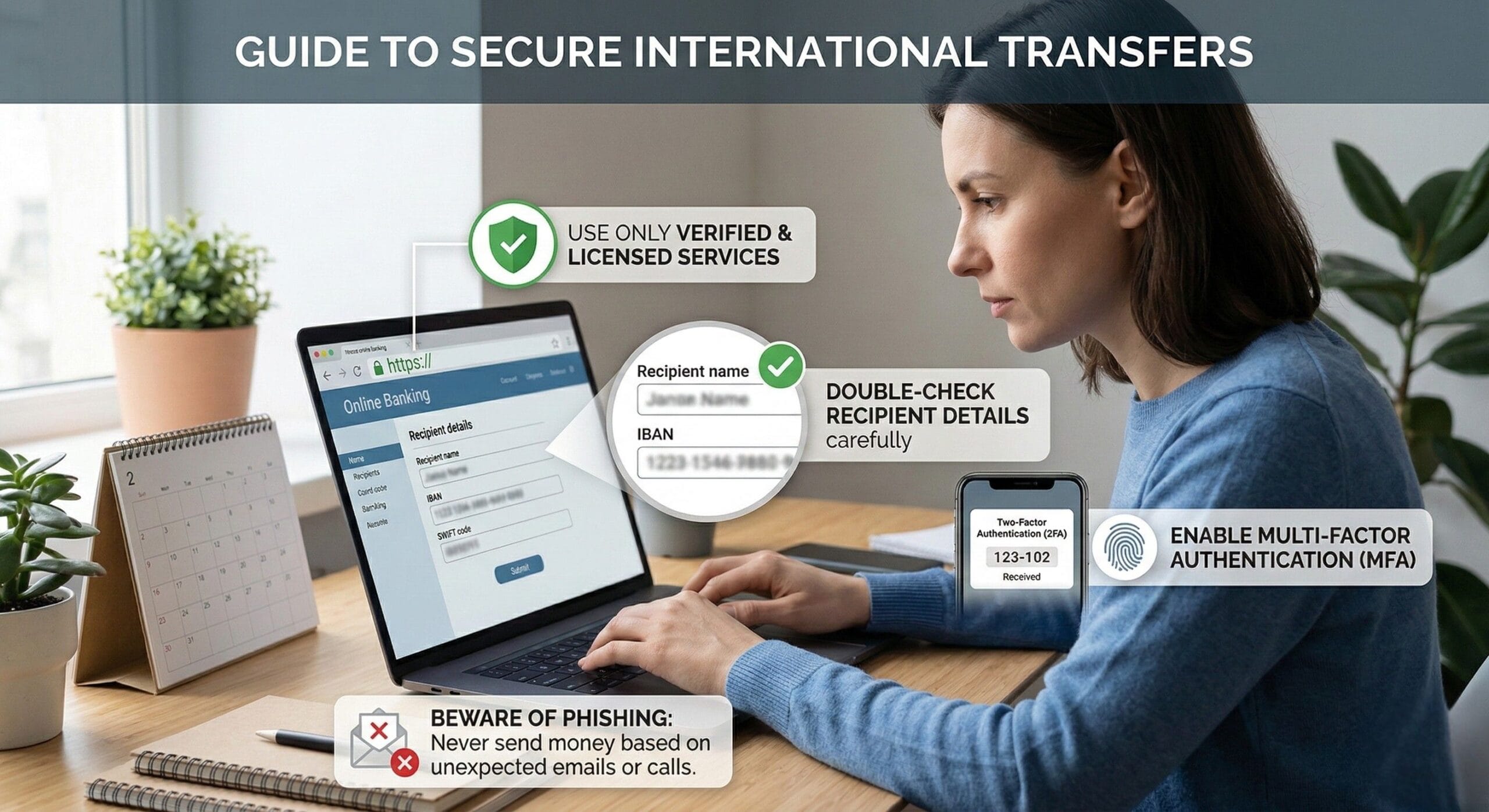
Every year, NRIs lose millions of dollars to transfer fraud. A single rushed decision. A fake call pretending to be your bank. An urgent message claiming a family emergency. Within minutes, hard-earned savings can disappear.
Golden Rule
If something feels wrong, stop. Verify independently before proceeding.
Cross-border transfers create unique vulnerabilities including:
- Different countries
- Different regulations
- Time zone gaps
- Currency conversions
- Fraudsters exploit this complexity.
Understanding the Fraud Landscape for NRI Transfers
Why NRIs Are Prime Targets for Fraudsters
NRIs are attractive targets because:
- Transfer amounts are often higher than domestic transactions
- Multiple currencies create confusion
- Distance makes verification difficult
- Time zones delay quick confirmation
- Many NRIs are unfamiliar with local scam tactics in both countries
The Scale of the Problem
International transfer fraud is growing annually. Common corridors include US–India, UK–India, and Gulf–India transfers.Average losses per victim can range from a few thousand dollars to six figures. Many cases go unreported due to embarrassment or uncertainty.Fraudsters specifically target NRIs because they know cross-border complexity increases vulnerability. Awareness is your first defense.How Fraudsters Exploit Cross-Border Complexity
They exploit:
- Regulatory confusion
- Currency conversion misunderstandings
- Impersonation of legitimate services
- Urgency in family situations
Common Fraud Schemes Targeting NRI Transfers
Phishing and Impersonation Scams
Scammers send:
- Fake bank emails
- SMS alerts with malicious links
- Calls pretending to be customer support
Family Emergency Scams
Scammers gather personal data from social media. They impersonate relatives claiming urgent medical needs. They pressure you to act immediately.Prevention tip: Establish family code words and always verify through a separate communication channel.Investment and Money Mule Scams
You may be promised guaranteed returns. You may be asked to transfer cryptocurrency. Or worse, asked to receive money and forward it elsewhere. Acting as a money mule can create legal liability.Property Purchase Fraud
NRIs investing in real estate are frequent targets.Scams include:
- Fake listings
- Forged documents
- Advance payment traps
Transfer Service Impersonation
Fraudsters create fake apps and websites. They advertise better exchange rates.They operate through social media ads. Always access services through official websites typed manually.Ironically, strong fraud prevention systems sometimes block legitimate transfers.Essential Security Measures Before You Transfer
Verify the Recipient Thoroughly
Confirm account details independently. Use video calls for family transfers. Verify business registrations for companies. Even one incorrect digit can send funds to the wrong account.Choose Secure Transfer Services
Check for regulatory licenses such as RBI or FinCEN registrations. Verify encryption certifications. Read reviews carefully. Confirm physical addresses and official contact details.Secure Your Own Accounts First
Enable two-factor authentication. Use unique passwords. Avoid SMS-only 2FA when possible. Monitor transaction alerts.Understand the Compliance Requirements
Correct documentation protects you from delays and fraud. Purpose codes matter.Understanding RBI purpose codes is not just about compliance. Correct coding ensures faster processing and reduces fraud vulnerability windows, and this helpful What NRIs Need to Know About RBI’s Purpose Codes for Inward Remittances guide explains how.Special Considerations for Students
Students are first-time international banking users. They may fall for fake tuition portals. Avoid intermediaries offering to transfer funds on your behalf.Indian students opening US bank accounts for the first time are especially vulnerable, and this practical How Indian Students Can Open US Bank Accounts Before Moving guide clarifies legitimate processes.Technology That Protects Your Transfers
How RegTech Fights Fraud in Real-Time
RegTech uses AI for:
- Pattern recognition
- Suspicious activity detection
- Sanctions screening
- Behavioral analysis
Embedded Security Features in Modern Banking
Modern apps include:
- Biometric login
- Device fingerprinting
- Location-based alerts
- Real-time notifications
Tools You Should Use
- Use password managers.
- Use authenticator apps.
- Avoid public WiFi for transfers.
- Enable account alerts.
Step-by-Step Safe Transfer Protocol
Before Initiating the Transfer
Verify recipient details independently. Confirm purpose legitimacy. Check exchange rates from multiple sources. Review all fees. Prepare documentation.During the Transfer Process
- Type URLs manually.
- Avoid clicking email links.
- Double-check details.
- Save transaction references.
- Take screenshots.
After the Transfer
- Track the transfer.
- Confirm receipt.
- Save documentation.
- Monitor accounts for unusual activity.
- Create a pre-transfer checklist so you never skip a step.
Compliance as a Fraud Prevention Strategy
How Proper Compliance Protects You
Documented transfers create audit trails. Compliant services offer accountability. Proper reporting strengthens recovery options.Tax Compliance and Fraud Documentation
Maintaining records helps prove legitimacy. US-NRIs must maintain FBAR and FATCA documentation, and this comprehensive Avoiding US Penalties and Double Taxation: A US-NRI’s Guide to FBAR & FATCA resource explains why proper records protect you in disputes.Tax Residency Impacts on Fraud Reporting
Where you report fraud depends on residency. Understanding your tax residency status clarifies jurisdiction, and this detailed The 120-Day Rule for NRIs: Are You Accidentally a Tax Resident of India? guide explains how residency affects legal standing.What to Do If You Suspect Fraud
Immediate Actions
- Contact your bank immediately.
- Freeze accounts.
- Document everything.
- Change passwords.
- Notify the recipient bank.
Formal Reporting Steps
In India, report to the Cyber Crime Portal and RBI Ombudsman. In the US, report to FBI IC3 and FTC. In the UK, report to Action Fraud.Recovery Options
Request chargebacks quickly. Cooperate with investigations. Explore legal recourse. Lost transfers due to fraud follow similar recovery steps as technical failures, and this practical What Happens If Your Transfer Is Lost? Stories and Solutions for NRIs guide explains the process clearly.Protecting Yourself Going Forward
Use credit monitoring. Update security protocols. Audit accounts regularly.Red Flags Checklist: When to Stop and Verify
| Category | Red Flags |
|---|---|
| Communication | Urgent pressure, threats |
| Payment Requests | Cryptocurrency, gift cards |
| Verification | Refusal to video call |
| Offers | Unrealistic exchange rates |
| Technical | Suspicious URLs |
| Behavioral | Requests for secrecy |
Building Long-Term Transfer Security Habits
Regular Security Audits
- Review accounts monthly.
- Update passwords quarterly.
- Check authorized devices.
Stay Informed
- Subscribe to security alerts.
- Follow cybersecurity updates.
- Engage with NRI forums.
Create a Trusted Transfer Network
- Use consistent verified services.
- Maintain updated recipient information.
- Establish verification protocols.
Teach Family Members
- Elderly relatives are vulnerable.
- Share security practices.
- Create emergency verification codes.